Interview par Anne-Cécile L.
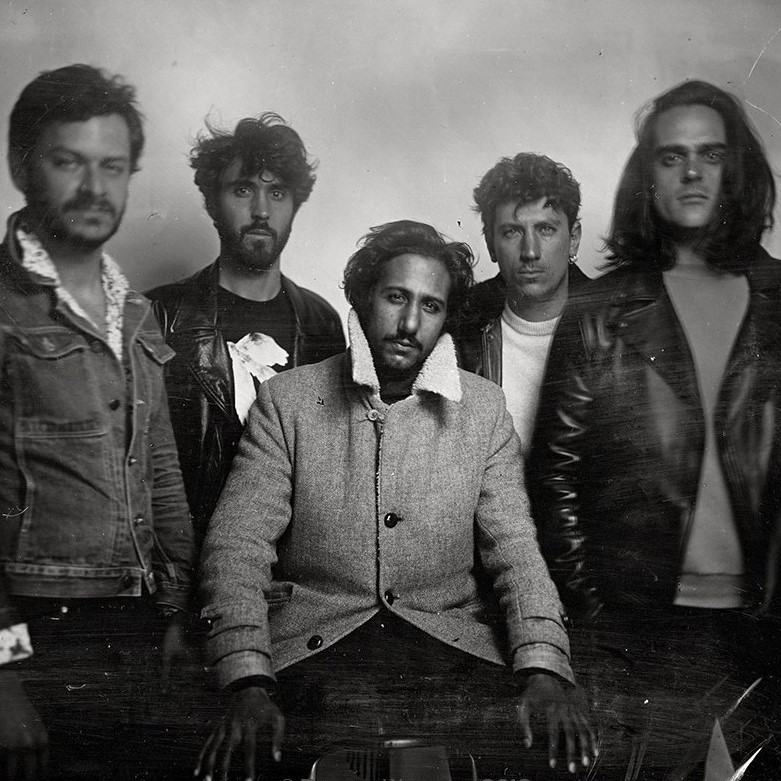
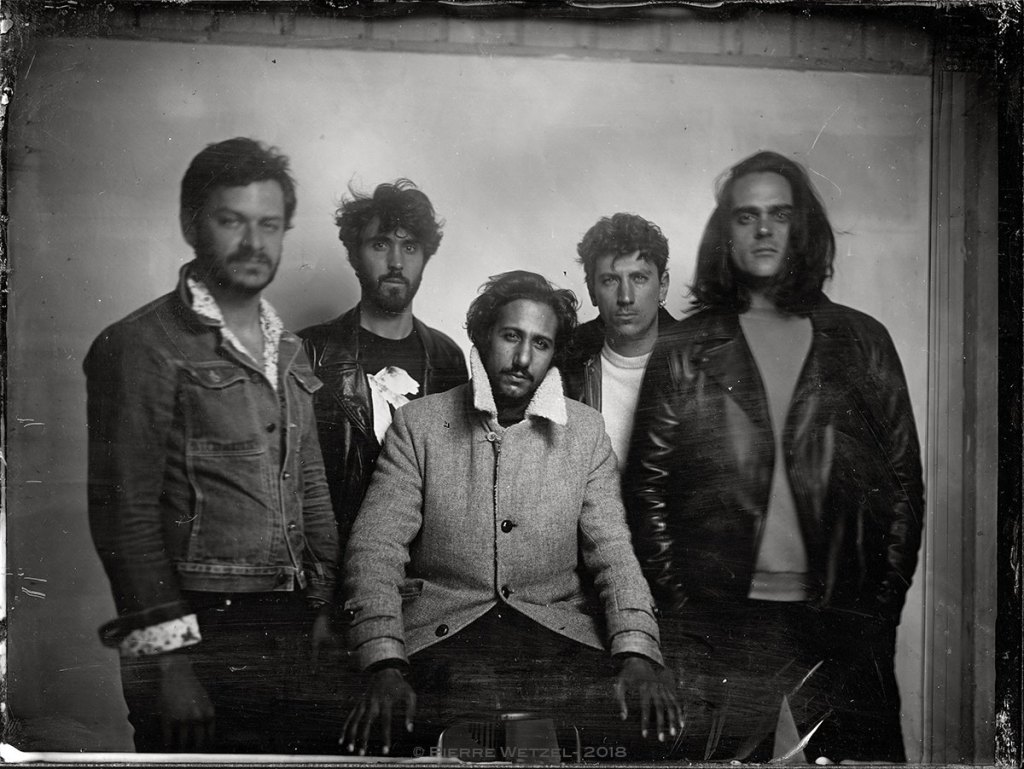
Photo Credit: Pierre Wetzel
Clique ici pour la version Française.
Saturday 14th of April, Feu! Chatterton was playing in my hometown, Brest. The occasion for me to meet Antoine Wilson, Arthur Teboul and Sébastien Wolf just before their show at La Carène.
You are back on tour with your new album, L’Oiseleur, released about a month ago… You were at Le Bataclan earlier this week… I guess it was quite intense, how was it?
Arthur: It’s a very intense week. We have six concerts in seven days. It’s the first time we’ve played so much. We played three shows at the beginning of the week, on Thursday we were doing promotion, yesterday we played in Rennes, and tonight, we are here, in Brest. Tomorrow we will be in Caen.
Parisian dates are always special for us, first because we are from Paris and also because there is something special there, you know that kind of spotlight on us, with the media, our label, our family and friends…
Antoine: Everyone comes to see us there…
Arthur: As we want to do something great because it’s our hometown, we were under pressure, also because we played three days in a row there.
And especially because you played at Le Bataclan, I guess…
Arthur: Yeah, it’s was our choice to play there. This venue means a lot in the history of our band. First, because it is our producer that runs it, so at the time of the attacks we were directly affected. Luckily, we didn’t lose anyone close to us, but our team did. For us, it is a form of commitment to keep this place alive, knowing that all the families (of the victims) also want to keep it alive. If one of the families didn’t agree, it would have been different but there is a special will, as the Music industry was the main target, to continue to play music there. Then, our music, and especially this record, is marked by these events… You see, there are songs about mourning, absence and loss… We felt on stage that it was the occasion for us to pay a real tribute. And not only by the fact of being there, playing music and making people happy but also through some of our songs like Souvenir, Porte Z or Côte Concorde which are an opportunity, in a way, to mourn.
On this new album, you said that your rule was not to have any. How did you work?
Arthur: It was mostly during the creative process. Why did we say that in the beginning? Simply because when you’ve done something that has been liked already, just like when you are in love if you know your charms a bit and what the other person could like, you’ll always tend to reproduce the same thing. It’s reassuring. But by doing this again and again, the charm is broken. There are no more surprises, no more accidents, so the tension gets lost… We played in front of lots of people on our first tour, two hundred shows, it worked well. So how do you manage to be spontaneous again? To put yourself in danger, to listen to yourself and not necessarily to other people? You see, in friendship, in love, there are moments when we – kind of – hide some parts of ourselves to please, to be loved. That’s when you have to say, « See, I’m like that too and I want to show it ». We didn’t have any rule. Just finding pleasure in playing together, the pure childish pleasure of making music. So afterwards, our rule became to enjoy making music. When a musical idea comes along with lyrics, when we start to have fun thinking that maybe it is the beginning of a song that is exciting! We keep going… Sometimes we get stuck, we go to bed after a whole night of work and then I start thinking « Wait, I have this idea » or we start talking to each other, and one of us will be like « I thought about that the chorus… » That’s how things progress in the long term.
Sébastien: Afterwards, we didn’t have any rules, but we may have chosen a method. What we could have done as we had success with our first album, was to lock ourselves into a studio, in « good conditions »… We tried at first, but it’s true to say that we didn’t feel comfortable. When your label is offering you a place to record you think that’s great, but then suddenly you feel like you’re doing things in kind of a utilitarian way. You have to do it. We like when things are done without any obligation and when we do it out of pure pleasure. So, we rented a small flat, we brought all our equipment and came there. Some of us were spending the night, others the day. That’s how the record was born. For two months, we were always in the same place and we wrote lots of things that way. Isolation is the rule we impose ourselves when we write and also when we record.
I loved L’Oiseleur. I couldn’t explain, I couldn’t say why, and then I heard you saying that it’s « a variation on absence and its acceptance ». I’ve read sometimes that it is in complete rupture with your first record Ici Le Jour (A Tout Enseveli), for me, it is more of an evolution. There’s the same melancholy, but you’ve « learned to live with it », haven’t you? Just as if Feu! Chatterton had grown up?
Sébastien: It’s a bit in the continuity of what we were saying before. We didn’t think at all of what we were going to do on this record. We were guided by our accidents, by moments of pleasure where suddenly an idea was born. Not thinking about it at all. At no point, we were like « We want to do something as we’ve done before » neither something completely different. We are the same people, we have changed during the past two years, but we remain the same people with tastes that we share, or not, but we try to put and mix them together. I think the record is in continuity with the first one because it was made with the same idea: that the five musicians of Feu! Chatterton must be touched by what we are doing. And we really mean « touched » like « deeply touched ». For example, Arthur can’t sing something that doesn’t move him, Antoine can’t play a bass line that doesn’t speak to him. That’s how the songs were born, and that’s why it creates a continuity, I think, between the two records. Maybe the difference is that when we were making this album, we wanted to use more keyboards because Antoine brought some new ones, that we liked a lot. We wanted to use them. There are new sounds, compared to the first record, but as said before, it’s the result of accidents. Because these instruments were available at the time we were making these songs.
Arthur: Afterwards, I think that this kind of maturity that can be felt is also because our songs are the reflection of experience, of life. Despite ourselves. It’s afterwards that we realise what we’ve done. We are like « Look, we talked about absence » because it’s something that was with us throughout the creation of the record. We all had experienced, kind of at the same time, with the tour, some break-ups, losses, things like that… Anyway, it was a kind of separation. Touring is a form of exile. It’s a sailor’s thing, you are always travelling. But it’s a moving exile. This exile takes you away from a lot of things. Sometimes it makes you lose things. As we have all experienced it at the same time, it was in us. It’s true that when I was writing, I was not thinking « I want to write on this specific thing. » If you listen to yourself, some thoughts go through you… I mean, if I wanted to write these things next year, I probably wouldn’t be able to do it because I won’t feel the same. Maturity comes from the fact that we trusted each other thanks to these two years of playing together on stage, accepting who you are and going further in what you want to express. Not wondering if it’s right or wrong.


Photo Credit: Annie Suignard
While working on the interview, I came across a podcast of you, Arthur and Sébastien, on France Culture, where you talked about anger. Arthur, you said « We have tamed that anger that we have within us so that it doesn’t obscure our view and it feeds us. (…) Because we are polite, we want to put it in our songs in a coded way. » That stayed in my mind for a while…
Sébastien: We really liked this interview, it was great!
Arthur: It’s funny you say that because we played at Le 106 in Rouen and we did an interview there, the journalist told us the same thing!
Sébastien: I remember when we left the studio at the radio, all of a sudden, we understood a lot about ourselves, about the record too.
The interview was really great! It was speaking to me a lot. A few years ago, I came across an interview with Johnny Rotten. I obviously knew the Sex Pistols without ever really being interested in his personality. It was about his autobiography Anger is an energy which was translated in French to La Rage Est Mon Energie. I didn’t know much about him, but I read the whole interview and, from that moment, he has been fascinating me. This sentence « Anger is an Energy » , which is from the song Rise, put words on those feelings I could not express, for years. When you have so much anger running through your veins, you know it could kill you, but you want to use it, you want to do something with it cause it is that rage that is keeping you alive. And what you said during that interview, Arthur, reminded me of this. Anger is also an energy for Feu! Chatterton, isn’t it?
Arthur: It’s funny because it is not what people see the most. It is a driving force. It’s the driving force that has to be tamed the most. It’s a beast. It’s THE beast that should not be given « raw » or frontally to people. Anger transmitted without any « transformation » is only anger. We don’t want to give it to people at all. We are trying to raise ourselves, to transform it because there is a form of sterility in anger… You can see it sometimes, it is only frustration. All you do is thinking « This is not good, this is not right… », well, you just remain helpless… All it takes is one little thing to think « Wait, ok we got it, but come on, let’s do something about it ». That’s why it’s not the first thing people can see. We find it more powerful to say « We are very angry, but we are going to give you love » and not the opposite. It’s better not to talk about it at all, transforming it immediately into joy and sweetness. That’s what we need.
Sébastien: I think that this record, even more than the first one, is more mature because we understood that anger, sadness – which are feelings that are often associated – had to be tamed or at least accepted. We had to be attentive to it because these feelings, that are really strong and can be found in each of us, are the result of big emotions. I think people can feel our anger during our live shows, for example in the way Arthur interprets the lyrics. Our music really tries to tame feelings that are quite violent. But we accept to release, to liberate them, to put them deep inside of us and then to transform these feelings into little amulets. And our songs are these amulets.
Arthur: And if we didn’t have this anger, we wouldn’t have this strength either. When we were younger, anger was something that you could only feel, kind of tetany. You couldn’t do anything with it. Now we have accepted that we have it inside of us and it’s because we don’t want to transmit anger directly, or frontally, that we try to say things about the world.
That was my next question. You said in this interview « Because we are polite », « because we have good manners », we express it (our anger) in our songs in a coded way. I’m a person who carries a lot of anger, for a billion reasons, and despite the education I’ve had, I express it in a really rough way most of the time. People often blame me for that. As if expressing this anger, from an external point of view, was something illegitimate, as if you should keep anger quiet and not express it openly… Do you think it is not compatible, being open about your anger and having good manners?
Arthur: It’s funny, if you hang out with us you’ll see that in real life, when we talk about our music, and not just between us – we do it openly. Me in particular. I grew up in that culture where we yell, we say things roughly. But it doesn’t work with people who are not used to it. And on the other hand, we don’t want our music to be like that, precisely because we try to put the best of us in it, what we find beautiful in us. And it’s not anger. It’s a simple thing… When you want to say something to someone, do you want to tell them so that things change? Or just to hurt them? If you want things to change, you know that telling them in a way that hurts is not the best way at all. But there are also times when you’re hurt and you want to hurt people back. That’s hard to control! To chose to say « No, I don’t want to hurt anyone. » Otherwise, you lower yourself.
Coming back to your music, how would you define yours in a few words?
Arthur: It’s hard!
Sébastien: Bright?
Antoine: It depends…
Sébastien: « Bright, but it depends. »
Arthur: Oneiric, kind of progressive rock. The problem is styles and labels. Nah, I’d say it’s an invitation to travel.
Antoine: Yeah, I agree.
Bashung and Gainsbourg are often listed as your influences, Arcade Fire and LCD Soundsystem too. I was talking earlier about Johnny Rotten who is one of my heroes. Beyond your music influences, who are your heroes?
Antoine: My father! No, I’m just kidding…
You could. My dad is also one of my heroes!
Arthur: It’s quite hard… There are plenty of them. For the past few years and because I’m obsessed with music, I would have said Barbara, Bob Marley…
Antoine: There is a Chilean singer that I listen to a lot at the moment: Victor Jara. He was imprisoned and killed under Pinochet’s regime.
Sébastien: Among musicians, I would say Johnny Cash, but since you talked about Chile, Antoine, that makes me think of Caetano Veloso. He’s a Brazilian singer. The entire Tropicalist movement – a musical and artistic movement in Brazil – wrote music, made films, wrote novels and short stories in a coded way during the dictatorship to criticise the system. But not directly. Thanks to them, Brazil came out of the dictatorship. I am half Brazilian.
I know that most of your music videos were directed by people close to you… Do you give them carte blanche?
Arthur: No.
Well, at least, it’s clear!
Antoine: Yes and no actually…
Arthur: We work with people close to us because they’re talented, but also because it’s important for us, as in we don’t set limits to our work. I mean, we can’t work with people who consider everything related to music as work. Sometimes it happens, whether they say « It’s 7 pm now, it’s over » or « I want that much money to do it ». For us this is a problem, whatever the moment of the artistic adventure. We can talk about money but afterwards, what really matters is that we are excited about the idea of doing something together… It requires a lot of devotion, a lot of sacrifices. Which sometimes means to spend nights working. You think it’s over and it’s not. When you work with people who are not close, there is a huge risk. Things are not finished and you say « Come on, let’s spend another night there » and they will reply, « No, it’s over, I don’t have time ».
Sébastien: Some people were not close to us at first, like, for example, Samy Osta – who produced our EPs and our two albums, well we didn’t know him. He’s like that. They are people with whom, what matters most, is what we’re going to do: the process, the adventure of doing it…
Arthur: Benjamin Kühn, who directed the music video for L’Ivresse, too. We weren’t that close either, but we became friends… So there are directors who were friends, but those who weren’t and who have this state of mind became friends of ours because that’s what we like. Even between us, you know it’s like, you decide to do something, something crazy, and you see it that glimpse in each other’s eyes. You can see if he follows you, or not. You need to have that kind of craziness/foolishness to be able to accomplish things. Otherwise, everything is impossible. If there are at least two of us, we have enough strength. I remember whole nights of editing, trembling because the video had to be released on a certain date. If you start telling yourself that it’s not going to work, it’s already a waste of time. These videos, the last ones, in particular, we made them in a hurry, but once we start, we need to keep going! I don’t like when people say « It’s not possible ».
We don’t have much time left, but I still have a few random questions…
What are your favourite movies?
Sébastien: Blue Velvet.
Arthur: That’s funny! I was going to say Mulholland Drive. We like David Lynch.
Antoine: I loved L’Etreinte du Serpent, a film by Ciro Guerra. It’s more recent. It’s set in the Amazon, it’s great.
What does Feu! Chatterton listen to at the moment?
Arthur: I’m listening to Léo Ferré.
Sébastien: At the moment I’m listening to a lot to Vald’s latest album.
Antoine: I’ve been listening to Vald a lot too!
Really?!
Sébastien: You didn’t want that answer?
No, I’m just surprised. It’s funny because in the few interviews I’ve done, we always end up talking about Booba, Vald… And the people I’m interviewing are soooo far from that kind of music that I don’t really understand…
Sébastien: No, but for real, it’s for a good reason. At the moment, in France, the kind of music that offers innovative and free things is Rap Music !
Last one, to end on a high note!
I listen to Wannabe from the Spice Girls once a day at the moment, I don’t know why but I’ve decided to assume it, are there any songs you are kind of ashamed to like?
Antoine : Mylène Farmer’s songs!
Arthur: For me, it’s Vitaa.
You know what? I think Vitaa is back and she will play at the Festival de Poupet this summer!
Antoine: Oh, yes! The day where there are only revivals / old bands?
Yes, that one! With Larusso, etc. Well, I’ll be there! I’ve bought a ticket. So come and see Vitaa with me!
Sébastien: What? No?! But I mean, it’s great!
Arthur: I like Vitaa, but to be honest, I especially like the song A Fleur de toi. I love it!
And you, Sebastien, what songs are you ashamed of?
Sébastien: Honestly? I’m not ashamed of anything!
Antoine: Oh, yes, I found one! What’s the title of Lionel Richie’s song « Is it me you’re lookin’ for? », you know?! Well Lionel Richie for me!
 DOYOUWANNADANCE?